Position & Account Risk
Understand how open futures positions affect account risk, capital at risk, stop-loss exposure, liquidation risk, and overall account exposure.
-
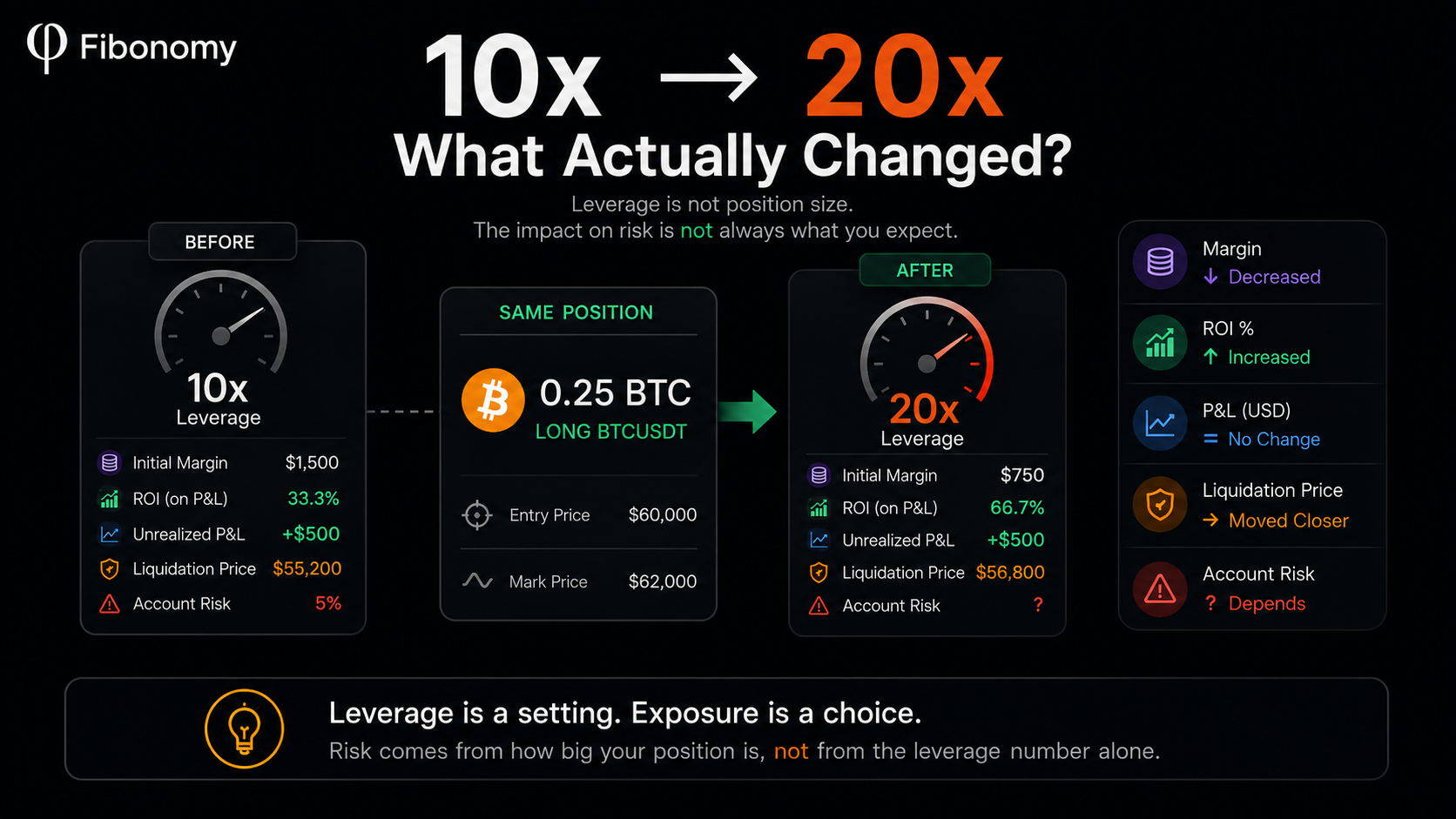
Why Changing Leverage Doesn’t Always Change Risk the Way You Expect
Changing 10x leverage to 20x does not automatically double the risk of an existing position. Position size, margin mode, stop distance, and account state matter more than the leverage number alone.
-
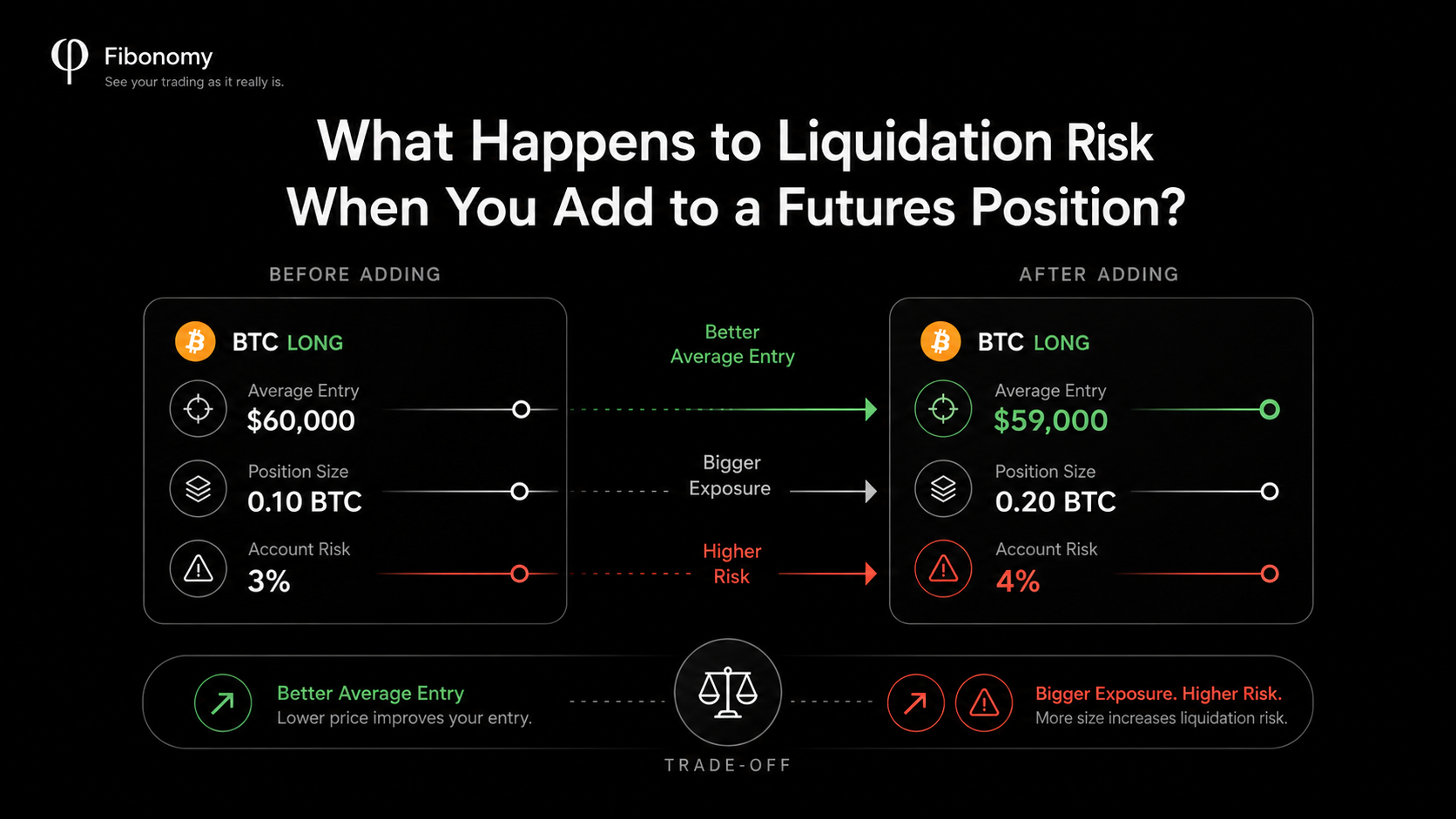
What Happens to Liquidation Risk When You Add to a Futures Position?
Adding to a futures position can improve your average entry price while increasing the amount of capital at risk. Here’s what actually changes when you size up.
-
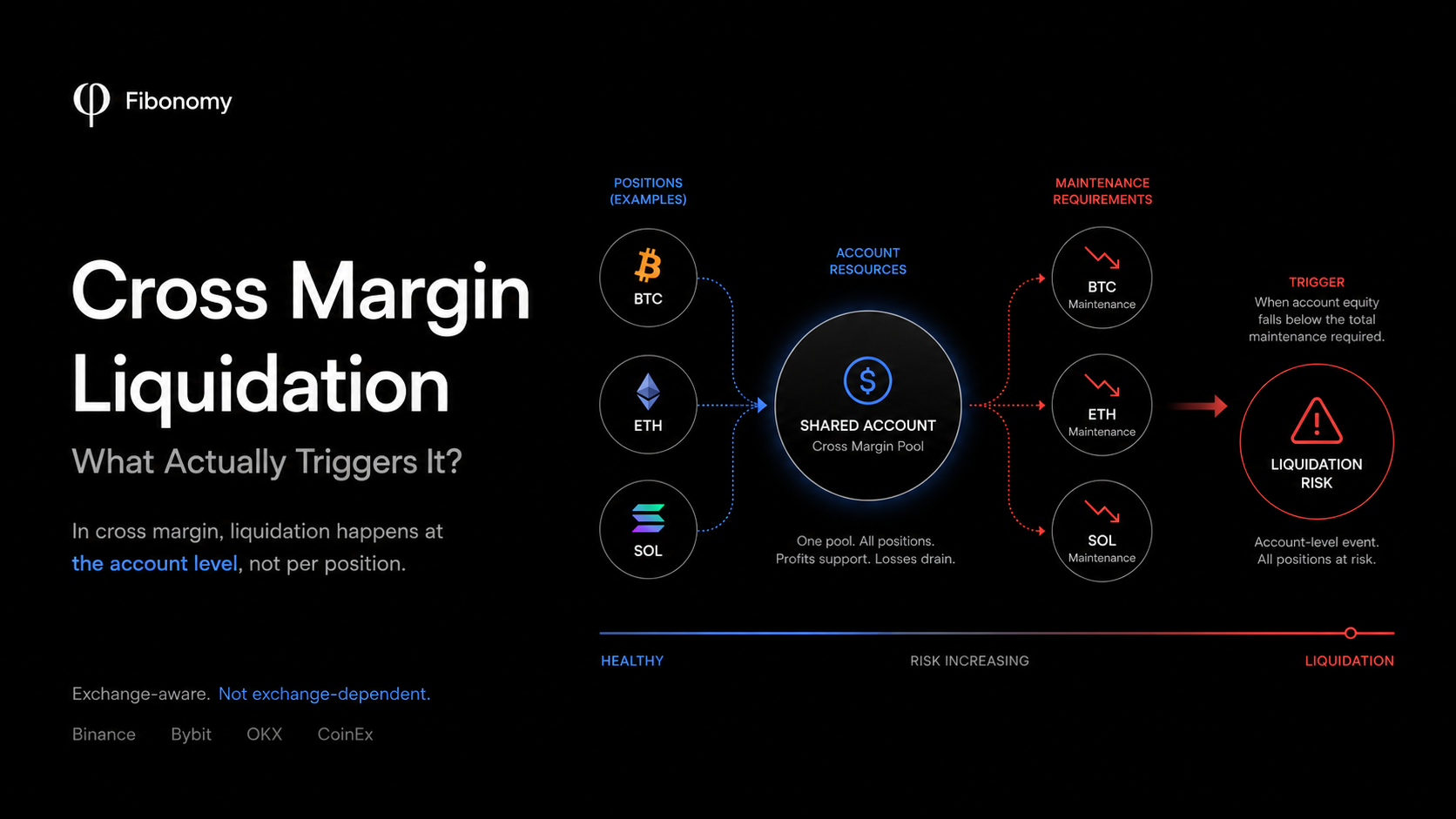
What Actually Triggers Liquidation in Cross Margin?
In cross margin, liquidation is often an account-level event. Here’s how equity, maintenance margin, open positions, and risk ratios combine to determine when the exchange intervenes.
-
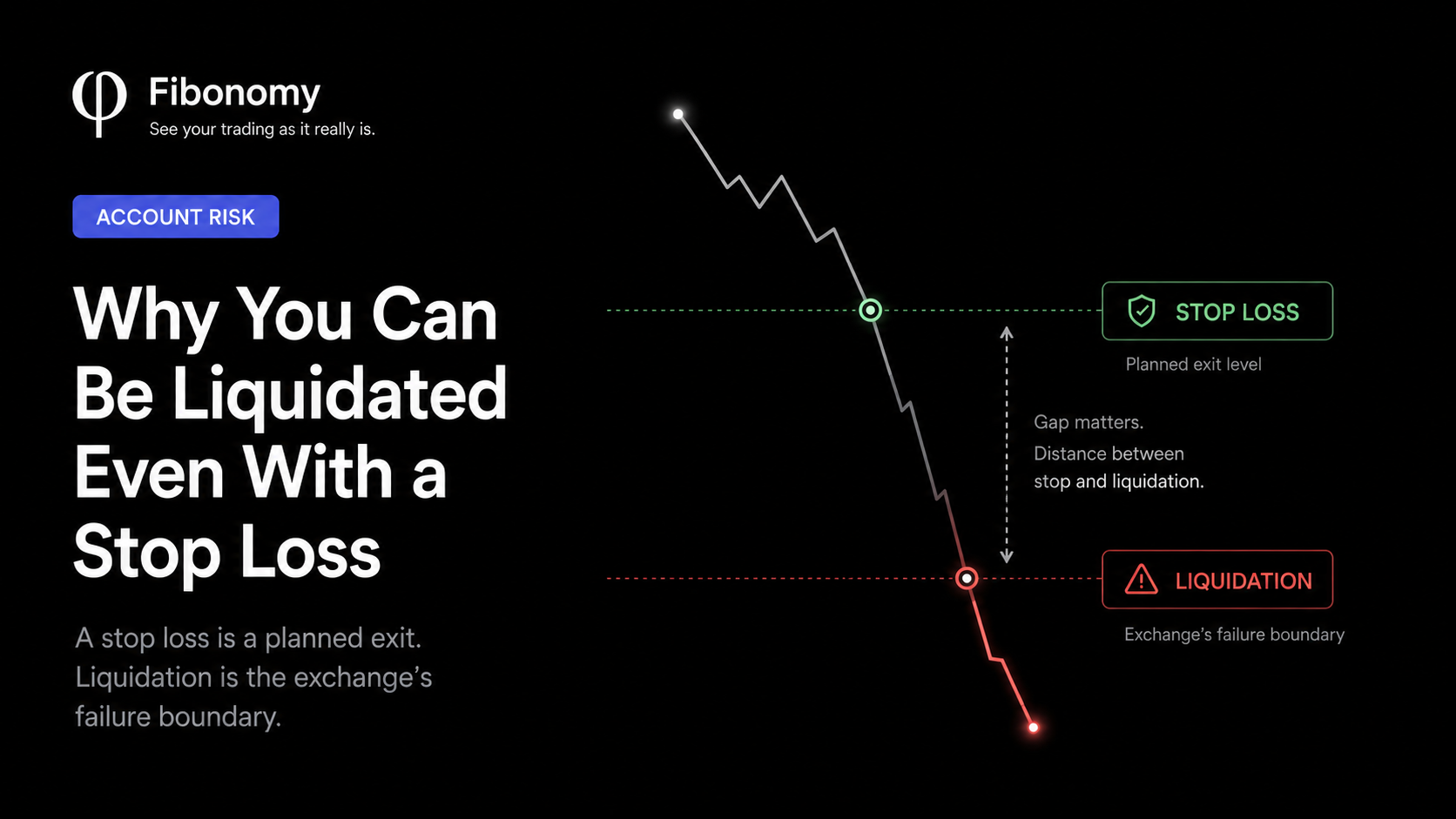
Why You Can Be Liquidated With a Stop Loss
A stop loss is a protection tool, not a guarantee. Learn why liquidation can still happen before or around a stop-loss event.
-
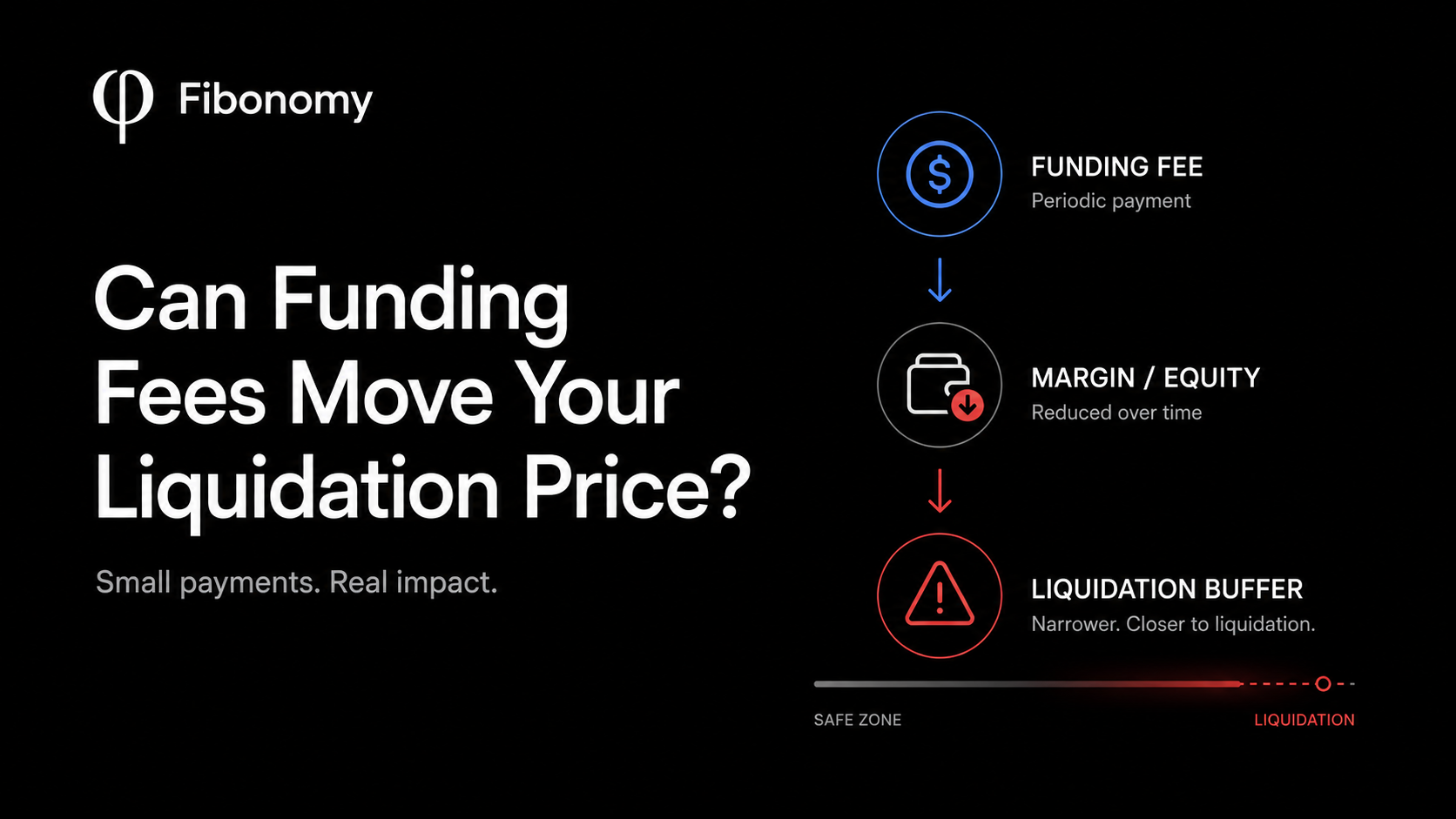
Can Funding Fees Move Your Liquidation Price?
Funding can change your futures account even when you place no new trade. Here’s how funding payments affect margin, equity, and liquidation risk.
-
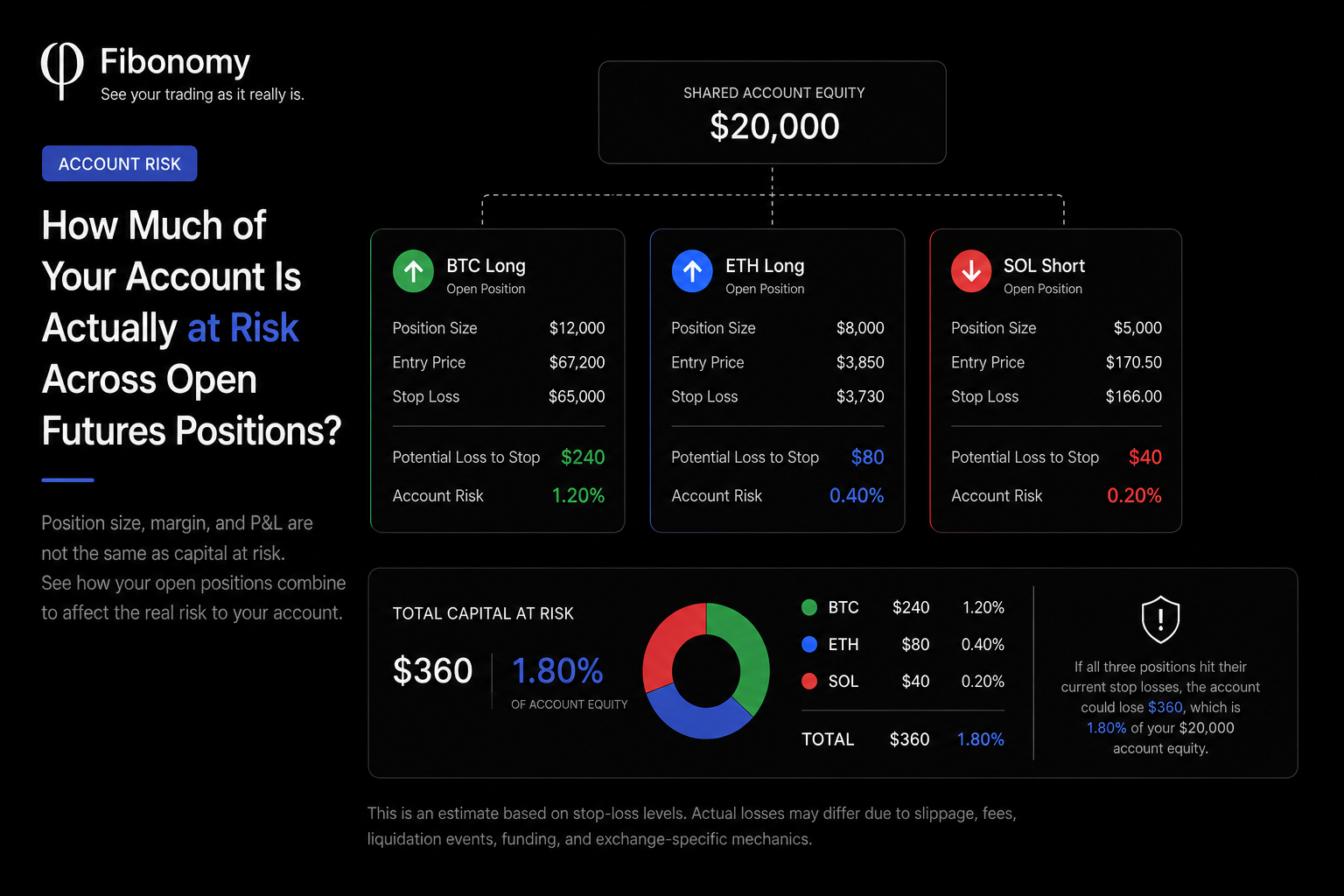
How Much of Your Account Is at Risk Across Open Futures Positions?
Position size, margin, and current P&L are not capital at risk. Here is how to measure the planned loss across open futures positions against account equity.
-
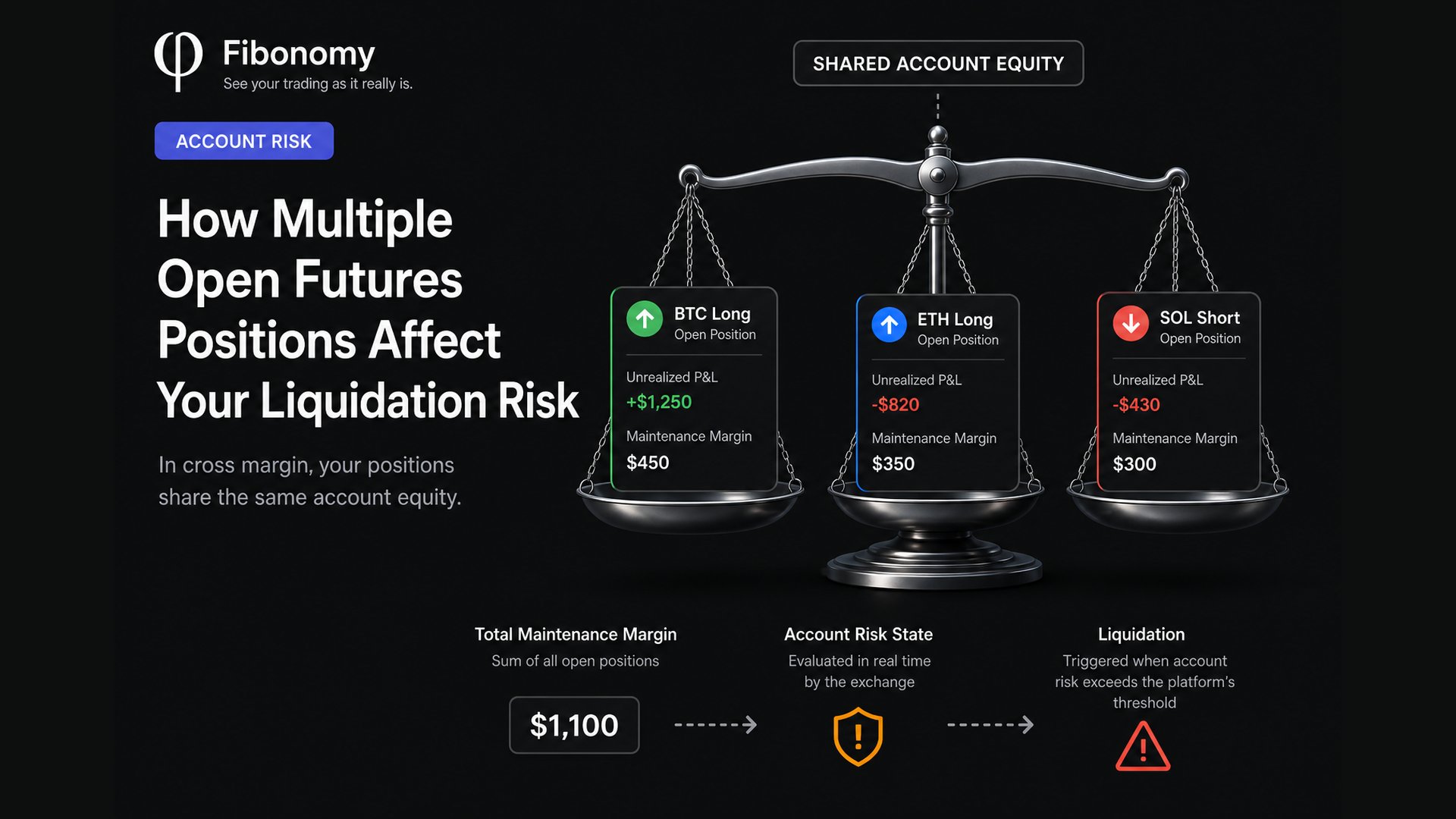
How Multiple Open Futures Positions Affect Your Liquidation Risk
In cross margin, open futures positions can affect the same pool of account equity. See how P&L, maintenance margin, and new positions change liquidation risk.
-
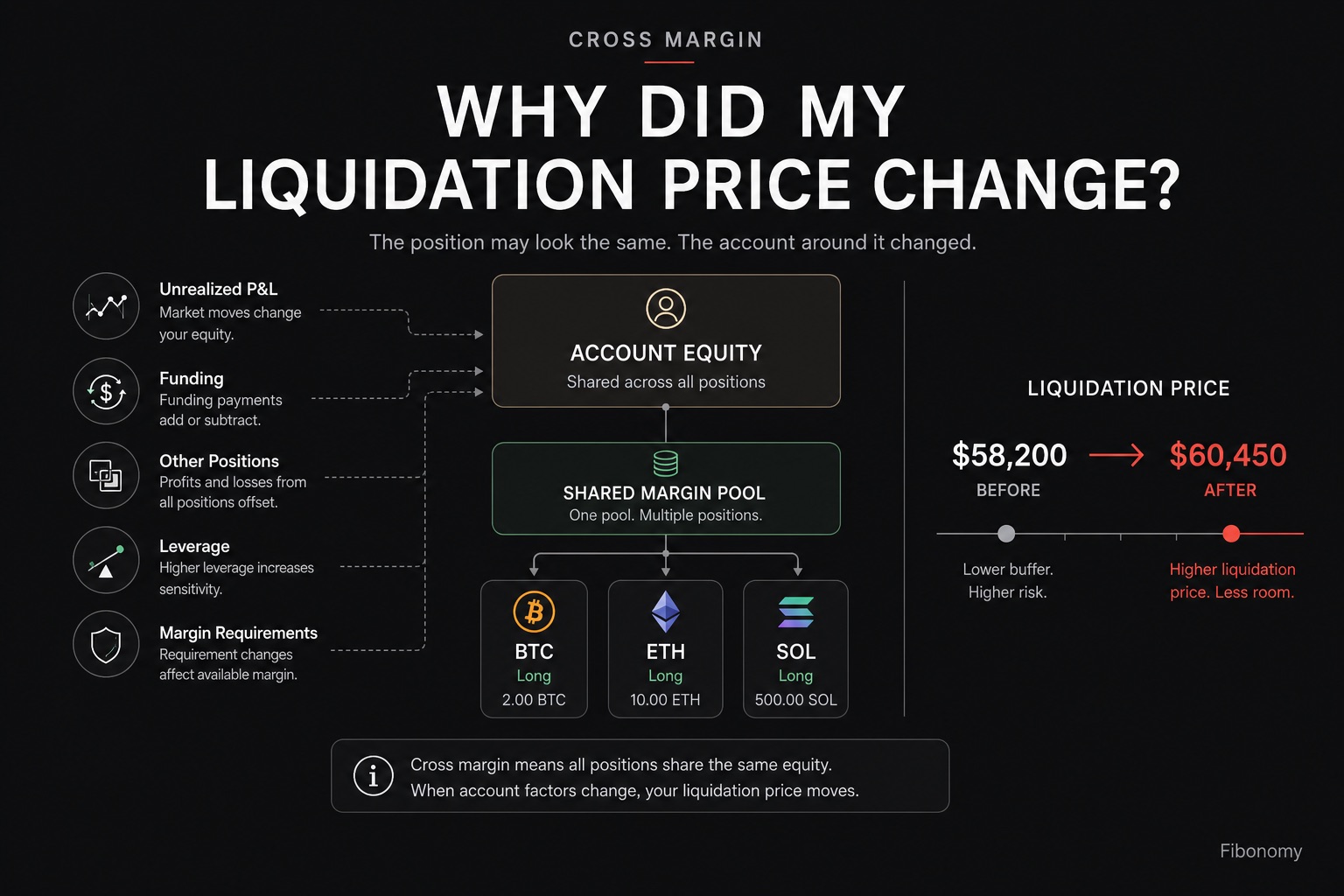
Why Does My Liquidation Price Keep Changing in Cross Margin?
Your liquidation price in cross margin is not always a fixed number. Learn how account equity, unrealized P&L, funding, leverage, and other open positions can move it.